
 English
 Español
 Portugues
 Pусский
 Deutsch
 العربية
 Italiano
 Svenska
 ไทย
ไทย Türk dili
 Indonesia
 Melayu
 Tiếng Việt
 қазақ
қазақ বাংলা
বাংলা українська
 norsk
norsk Filipino
 o'zbek

수직 선반
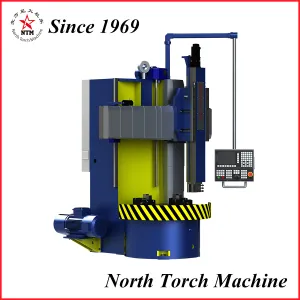
Vertical Lathe: Overview and Applications A vertical lathe, also known as a vertical turning lathe (VTL), is a specialized machine tool designed for machining large, heavy, or asymmetrical workpieces. Unlike conventional horizontal lathes, a vertical lathe positions the workpiece vertically, allowing gravity to assist in securing the part, which enhances stability and precision during machining. Design and Working Principle The primary components of a vertical lathe include a rotating table (chuck), a vertical column, a crossrail, and tool heads. The workpiece is mounted on the horizontal rotary table, which spins around a vertical axis. The cutting tools, mounted on the tool heads, move along the X, Y, and Z axes to perform turning, facing, grooving, boring, and threading operations. Key features of vertical lathes include: - Sturdy Construction: The vertical orientation minimizes deflection, making it ideal for heavy-duty machining. - Large Workpiece Capacity: Suitable for machining large diameters and heavy components like turbine rotors, gears, and flanges. - Precision and Stability: The vertical setup reduces vibration, ensuring high accuracy. - Automation Compatibility: Many modern VTLs integrate CNC controls for automated, high-efficiency operations. Applications Vertical lathes are widely used in industries requiring the machining of large, heavy, or complex parts, including: - Energy Sector: Manufacturing turbine components, generator rotors, and valve bodies. - Aerospace: Producing landing gear parts, engine casings, and structural components. - Heavy Machinery: Machining large gears, bearings, and hydraulic components. - Transportation: Fabricating railway wheels, brake discs, and marine propulsion parts. Advantages Over Horizontal Lathes - Better Workpiece Handling: The vertical setup simplifies loading/unloading of heavy parts. - Improved Chip Evacuation: Chips fall away naturally, reducing interference with machining. - Space Efficiency: Requires less floor space compared to horizontal lathes for similar-sized workpieces. Conclusion Vertical lathes are indispensable in heavy industrial machining, offering superior stability, precision, and efficiency for large-scale components. Their versatility and robust design make them a preferred choice in sectors where conventional horizontal lathes fall short. With advancements in CNC technology, vertical lathes continue to evolve, meeting the demands of modern manufacturing.
제품
범주:
수직 선반
-
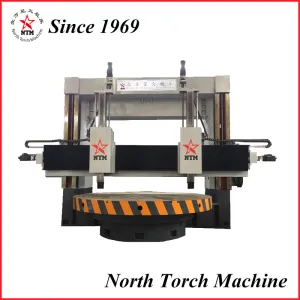
이중 기둥이 있는 수직 선반
분류: 수직 선반조회수: 52번호:릴리스 시간: 2025-11-25 13:21:40이중 기둥이 있는 수직 선반: 종합적인 개요 이중 기둥이 있는 수직 선반은 고강도 가공 작업을 위해 설계된 최첨단 다목적 공작 기계입니다. 탁월한 안정성, 정밀도, 크고 복잡한 공작물 처리 능력으로 인해 항공우주, 에너지, 자동차, 중장비 제조 등의 산업에서 널리 사용됩니다. 이 기사에서는 이중 기둥이 있는 수직 선반의 주요 기능, 장점, 적용 및 기술 발전을 살펴보고 현대 제조에서 그 중요성에 대한 자세한 이해를 제공합니다. 1. 이중 기둥 수직 선반 소개 이중 컬럼 수직 선반은 단일 컬럼 설계에 비해 우수한 강성과 내하중 성능을 제공하는 2 컬럼 구조를 특징으로 하는 수직 선반 유형입니다. 이 기계는 절삭 공구가 선삭,... -
뉴스
범주:
-
[Industry news]중선반 기계 - 작동 중 안정성을 보장하는 방법은 무엇입니까?
2025-11-26 09:11:25
케이스
범주:
검색 결과가 없습니다!
비디오
범주:
검색 결과가 없습니다!
다운로드
범주:
검색 결과가 없습니다!
모집
범주:
검색 결과가 없습니다!



 핸드폰
핸드폰